


The furnace intake vent must be clean for your heater to work properly. A supply of fresh air delivers oxygen to the combustion chamber. Without it, your furnace will malfunction or shut down. But as the vent is drawing in air, it can also attract dirt, lint, and other materials that can build up on the vent screen.
Therefore, when your furnace isn’t heating properly, check the exhaust vent. To find it, follow the intake and exhaust pipes to an exterior wall (usually near the appliance). Then, go outside to the same location, near the foundation, to identify the pipe opening or a white cover in front of it.
Unblocking a Furnace Intake Vent
A small brush is usually enough to clear debris off the screen. For more stubborn buildup, you can use a shop vac, but that usually isn’t necessary. To start, use a wire brush to remove:
- Leaves: Leaves that fall from deciduous trees or are blown by the wind can be sucked toward the intake vent and block it.
- Snow: Accumulating and drifting snow can easily block furnace intake vents that are low to the ground, preventing fresh air from getting through.
- Soot: If the intake vent is located near the exhaust, soot can be sucked back toward your furnace. Outdoor air pollutants can leave soot deposits as well.
Other culprits that can block exhaust vents include:
- Branches
- Birds
- Rodents
- Rust/Corrosion
- Damage to the Vent
Just a small amount of debris can cause your furnace to stop working. Once it is removed, the heater should start up again. If it doesn’t do so automatically, turn it on manually or follow the manual’s instructions for cycling it on. There may be a separate issue if your furnace still doesn’t start running.
How Do I Identify a Blocked Intake Even If My Furnace Is Still Running?
A partial blockage will still cause a problem. This can occur with leaves that make it deeper into the pipe. They may get lodged in an elbow and lie flat, so your furnace’s safety switch won’t trigger.
You may then notice the odor of decaying leaves in your home. Other decomposing organic debris can let bad smells in as well. But dry leaves pose a risk as they can sometimes get into the burner chamber and ignite, damaging wiring and causing a fire.
Similar issues can occur if animals get into the pipe and pull in leaves, straw, grass, and other nesting materials. Foods animals bring in, as well as their feces, can clog intakes, too.
It can be difficult to reach in and clean the deeper parts of the pipe. Therefore, you should call a professional if you believe the blockage is farther than you can reach.
How Can I Prevent Furnace Intake Vent Blockages?
A vent screen can prevent a blockage inside the pipe. But even this must be properly maintained and kept clear. A contractor can also install the vent in an area that’s not prone to leaves or snow piling up. Also, to stay on top of maintenance:
- Rake up leaves quickly.
- Don’t aim a leave blower toward the vent.
- Face a side-discharge lawn mower away from the intake.
- Don’t allow plants, grasses, and shrubs to grow around the vent.
Why is it Important to Keep Furnace Intake Vents Clear?
There are many reasons why you should try to keep furnace intake vents clear.
- Prevents carbon monoxide buildup and potential poisoning: If the intake vent is blocked, the furnace won't burn correctly. This can lead to incomplete combustion and the production of CO.
- Improves system efficiency: Blocked vents can reduce how well the furnace functions. It may need to work harder to provide your desired heat setting, increasing utility bills and wear on your system.
- Prevents ice buildup: Snow or ice blocking the intake vents can cause frozen clogs in the pipes.
- Ensures furnace won't shut down: If a blockage is detected in your system, your furnace will immediately shut down, leaving you uncomfortable in your home.
Call Black Hills Home Services for Help
Prevent clogged furnace exhaust intakes. If you believe debris has adversely affected furnace performance, contact Black Hills to investigate the problem. You may have a clog deeper in the furnace intake vent. Licensed and bonded, we provide professional heater maintenance and repair services in the Olympia area. Schedule service online.
Schedule Online(360) 822-9659The modern thermostat is just a small part of your heating and cooling systems in your home. The thermostat plays an enormous role. It must stay in good repair and operating condition for your HVAC system to run the way you need it.
Often, thermostat malfunctions are mistaken for faults in other parts of a comfort system, although trained professionals can quickly get to the source and provide the repairs or replacements needed to fix the thermostat.
Below are some common thermostat problems.
Heating or Cooling System Won't Turn On
When an HVAC system fails to come on, it causes an immediate sense of alarm. Although it’s possible that a catastrophic mechanical failure or power loss has caused this, a more common cause is a thermostat that has lost connection to the system.
Thermostats use five different wires to communicate with the HVAC system. It only takes a lost connection in the ones responsible for turning on/off your heater to cause the system to stop running.
Furnace or AC Won't Stop Running
The opposite problem can also occur. Crossed connections can lead to the heater continually running, wasting energy and making your home extremely uncomfortable.
This can also occur because of a thermostat miscalibration, meaning the thermostat is misreading the temperature in your home and believing the HVAC system must continue to run to reach the target temperature.
Uneven Heating or Cooling
A miscalibrated thermostat can also cause a heater to run too briefly to be able to spread heat or cool air evenly through your home. If you start to notice rooms in your home that are hotter or colder than others, the thermostat is one of the likely reasons for it. If the thermostat is behind any of these problems, it isn’t difficult for a trained repair technician to fix the problem.
Often, it will require a new thermostat installation. You should take this opportunity to update your model to the newest technology. A programmable or smart thermostat will save you money with precision controls and the ability to program it or access it remotely.
What Can I Do if My Thermostat Isn't Working?
You can start by troubleshooting your thermostat.
- Try replacing the batteries: You should change your thermostat batteries once a year. If you have a blank screen or flashing battery alert, change the batteries.
- Check that the thermostat is set to heat or cool: If the thermostat is set to fan or off, your AC or furnace won't turn on. Increase the temperature to higher than the current indoor temperature.
- Check the circuit breaker: Verify that the circuit breaker is set to "ON" and not "OFF".
- Clean your air filter: If you have a clogged air filter, then your system may not turn on. Dirty air filters can cause the system to overheat and turn off.
When to Contact an HVAC Professional
If you still can't get your system to turn off after troubleshooting your thermostat, this may be a sign of a larger issue. Immediately contact a local HVAC company like Black Hills. We can diagnose, repair and get you back to being comfortable in your home.
Schedule Online(360) 822-9659While today’s HVAC systems are designed to last, expensive repairs can pop up along the way. Buying the right central air conditioner warranty is a sure way to protect your investment and save you money in the long run. If you’re buying a home, ask whether the central AC system is under warranty and if coverage can be transferred.
It’s not uncommon for new homeowners to deal with a failed heating/cooling system within a few months. While most newer systems will run trouble-free for years, breakdowns do happen, and you need to be prepared for when they do.
What Homeowners Wish They Knew Before Their AC Broke
Failing to replace your AC before it breaks down can lead to discomfort during the hottest days of summer. You're also rushing to pick an air conditioner and find an HVAC tech with availability.
Most homeowners wish they had taken the time beforehand to prioritize replacement. A good sign that you may need a new unit is your warranty expiring.
Central Air Conditioner Warranty Facts and Types
To better understand how warranties work, here is a rundown of the types of coverage you may get with HVAC equipment.
Manufacturer Warranties
Manufacturer warranties provide coverage for faulty parts and components. A simple defect or error can cause the system to fail. If that’s the case, the manufacturer will fix or replace your air conditioner at no charge.
A warranty can therefore make an HVAC breakdown less frustrating and stressful. Oftentimes, the life of the warranty can be extended by registering the product with the manufacturer or HVAC contractor that installed it.
Labor Warranties
Labor costs are generally not covered by a manufacturer’s warranty. If there were any errors, mistakes, or mishaps during installation, cleaning, or maintenance, a labor warranty will cover the cost of repairs.
Most manufacturers cover labor for up to two years. You can save a lot on repair and replacement costs, especially if the underlying issues resulted from the carelessness of a technician who may lack experience or attentiveness.
How Long Do Warranties Last?
A 5-year warranty is included with most central air conditioner warranties. Newer products are designed to run for 10 to 15 years. Most usually run fine during the warranty period.
Parts and labor warranties may be good for a few years. It’s important to review the fine print to ensure that the warranty meets your needs and is likely to have financial benefits well into the future.
Do I Need an Extended Warranty?
An extended warranty can be purchased at an extra cost that may or may not be worth it. In some cases, the cost of coverage can exceed that of labor. Plus, extended warranties often require periodic service, which can add on to the initial price.
When you buy an extended warranty, it continues to cover your system when the manufacturer’s warranty period is over. Extended warranties are also often transferable when you sell a home. They can add value to your home as well, so whether one is worthwhile all depends on what you expect from it. Depending on the warranty, you may extend a three- or five-year parts/labor warranty to as much as 10 or 15 years.
Generally, extended warranties are pushed by HVAC sales professionals for profit. They know your equipment is unlikely to break down between the time the manufacturer’s warranty expires and before the expiration date.
If you do purchase extended coverage, be cautious about buying it from a third-party, as there’s a chance the manufacturer won’t recognize it and you’ll have to pay for repairs upfront anyway (unless the warranty seller reimburses you).
Contact Black Hills Inc. Home Services
Our trustworthy and knowledgeable home services professionals are committed to ensuring customers’ home comfort in Olympia, WA, and the surrounding areas. When you need HVAC repairs, they’re available 24/7 for emergency service and can address any problem.
We use only high-quality parts and get the work done right the first time at the price we quote. Request service online or call us directly at 360-822-9659 today!
Schedule Online(360) 822-9659Why You Should Plan Replacement Early
Central air conditioning installation requires many considerations. We do not recommend doing it yourself, as this risks serious injury. It can also result in costly damage to the system.
Only a licensed HVAC installer should take on the job. They are trained and knowledgeable in all aspects of AC installation to ensure you get the most out of your investment. In this guide, we will cover the major steps and considerations for installing a central AC system.
Types of Central AC Systems
In most homes, you’ll find a split system that features indoor and outdoor components. The blower and evaporator coil are in the air handler, while the condenser coil and compressor are contained in an outdoor unit. Both are connected by refrigerant lines.
For homes without ductwork, a ductless mini-split system may be installed. It also uses an outdoor unit, which is connected to air handling units serving individual rooms. This configuration provides more control over temperature and energy use.
A heat pump is a type of split system capable of heating and cooling. It can draw heat from or release it to the outside air, while a geothermal system extracts heat from underground.
Combining an electric AC system and a heat pump, a packaged air conditioner is installed on the roof. A more flexible solution, it conserves indoor space and is more often used for commercial buildings.
Additional Central AC Components
The indoor and outdoor units aren’t the only components installed during central air conditioning installation. Installing ductwork adds to the cost and you must have space for it. And even if you have existing ductwork, it may need to be repaired or reconfigured during the installation process.
Duct sealing is an important step as air leakage can drastically reduce efficiency. Indoor air quality solutions, such as a whole-home dehumidifier, high-efficiency air filter, or whole-home air purifier, may also be recommended.
How Do I Select an AC Unit?
Selecting an AC unit is an important step in the process. Contractors perform a Manual J load calculation, a standardized method of sizing an air conditioner developed by the Air Conditioning Contractors of America.
It is essentially a heat gain calculation that factors how your home is oriented towards the sun, how well your home is insulated, and the types, number, and placement of doors and windows.
Also important in choosing a central AC are:
- Size: Central air conditioner size is expressed in British Thermal Units(BTUs)/hour or tonnage. There are 12,000 BTUs in one ton and 30,000 BTUs in a 2.5-ton AC. If the unit is undersized, your home won’t get cool enough and the system will burn more energy by running longer. But if it’s oversized, it will cost more to operate and won’t run long enough to dehumidify your home, possibly leaving rooms feeling warm as well as clammy and damp.
- Efficiency: An air conditioner’s efficiency is rated using the seasonal energy efficiency ratio, or SEER. Efficiency is measured by how many BTUs the system can remove for each watt of electricity consumed. The higher a unit’s SEER number, the more efficient it is overall and the less energy it consumes at lower temperatures. A SEER of at least 13 is required by federal law.
- Placement: Condenser placement is important because this component always makes some noise. Therefore, you don’t want it adjacent to a bedroom or home office. Also, it should not be placed in an enclosed area, as restricted airflow can overheat the condenser and reduce the system’s efficiency. As long as air can circulate, the unit can be blended in with your landscaping.
How Much do Air Conditioners Cost?
In a 2,000-square-foot home with a forced-air heating system, adding or replacing central air conditioning can cost around $3,500 to $4,000. The process takes about two to three days.1
Between equipment costs and extra work time, installing ducts can double the expense and timeline. The split between labor and materials is generally 60/40.
Central Air Conditioning Installation Process
The main steps to the installation of your new central AC system are as follows:
- Ductwork Installation: Ducts are often placed behind drywall, but sometimes in closets or soffits to avoid wall repair, or existing ducts are modified.
- Interior Unit Placement: The evaporator coil is installed in the furnace plenum, from where air enters and is distributed throughout your home.
- Exterior Unit Placement: The unit is placed, factoring in noise, ground leveling, the distance to the interior unit and electrical panel, and codes that specify distances from gas or water meters.
- Line Set Connection: The outdoor and indoor components are connected by copper pipes that carry the refrigerant; these lines are routed via the most direct path.
- Electrical Lines Are Run: An exterior shutoff is installed for the condenser unit and an electrical line is run from the shutoff switch to the service panel. If necessary, the panel will be upgraded to handle the extra load. A low-voltage wire from the condenser to the furnace is installed for the thermostat.
- Condensate Drain Line Installation: For basement units, the line is run to a floor drain; with attic units, water may be funneled outside or a drain pan is used for evaporating water.
- The Thermostat Is installed: You’ll likely need an updated thermostat. Some homeowners have the skill to do this, but it’s recommended you let the HVAC contractor properly install it.
Indicators That Your System Might Not Be Ready for Intense Summer Heat
The spring season is the perfect time for an HVAC cleaning, as winter can be unforgiving on HVAC equipment. And with summer around the corner, failures can be common during the brutal summer sun. And you know you're going to need air conditioning during these times. It’s a good idea to make sure your AC is ready, so it is efficient and less likely to break down. These tips will help ensure your system is ready for spring.
Get an HVAC Tune-up
Now is a great time to have your HVAC tuned up. A professional tune-up factors in all the maintenance points that contribute to a reliable, long-lasting, clean HVAC system. In general, a tune-up involves:
- HVAC Filter Replacement: This is one of the first tasks a technician will perform. A clean filter maintains optimal airflow and prevents dust and outside particles from affecting the air quality in your home.
- Clean the System: Spring maintenance should involve cleaning the evaporator fan, kitchen/bathroom fans, coils, drain pans, registers/grills, plenum space, blower motor, and heat exchanger.
- Air Duct Cleaning: Dust, dandruff, pet hair, and a variety of other contaminants can get stuck in your ductwork, affect HVAC performance, and recirculate into your home, triggering allergies and discomfort.
- Debris Removal: Your outside unit may have leaves, branches, soil, and other debris left behind from winter storms and natural processes. Clearing the unit allows parts to move without restriction and ensures the unit is properly ventilated.
- Worn Parts Replacement: As wear and tear affect individual parts, a tune-up lets a technician make repairs before more serious HVAC problems occur.
There are many reasons an HVAC tune-up is beneficial. Some of the top ones include:
- Reduced Risk of Breakdown: While your AC may have taken a rest for the winter, mechanical and electrical issues may still be present. Systems are often strained a bit when started for the first time. Minor issues can therefore turn into big headaches; start the season off with a tune-up to ensure your HVAC system will run smoothly on hot days and nights.
- Improve Energy Efficiency: Replacing the filter, lubricating parts, and cleaning the interior of your HVAC system allow it to run more efficiently, reducing energy consumption and potentially cutting the cost of your monthly utility bills.
- Improve Indoor Air Quality (IAQ): Removing dust and debris from inside the cooling system keeps your indoor space free of irritating and sometimes harmful particles. These can be much more concentrated than outdoors. Cleaning an HVAC system is therefore a very important maintenance task.
Get an Inspection
The sooner you schedule your HVAC inspection, the better. Calls tend to pick up in the summer when people start experiencing more AC problems. But getting a tune-up early often avoids long wait times.
We’ll inspect your system for excess moisture, leakage, rust, corrosion, and signs it may be overheating. Our technicians can also check how well it is performing and test major cooling and electrical components. Typically, any necessary adjustments or repairs can be completed on the spot.
Contact Black Hills Inc. Home Services Inc.
Request a service appointment online to ensure you get the AC maintenance you need. The technicians at Black Hills Inc. Home Services are dedicated to providing HVAC cleaning, tune-ups, and inspections for customers in the Olympia area. We are highly regarded for professional service and quality parts.
And with our Silver Club maintenance program, you can receive priority service, special offers, and discounted rates. Call (360) 822-9659 today!
Schedule Online(360) 822-9659Spring Checkups Can Ensure Your System Works in Summer
An AC tune-up is the best way to keep your air conditioner running efficiently and avoid a breakdown on one of the hottest days or nights of the year. But what exactly does this entail?
An HVAC contractor will recommend an annual tune-up once a year; or twice annually if you have an older unit. Your system should be serviced in the spring in preparation for summer. To make sure you don’t forget, mark the last service call on your calendar.
How an AC Tune-Up Helps
A tune-up allows an AC technician to fix any problem they find. It also provides opportunities to reduce wear and tear and optimize performance. The unit may be working harder to provide cooling, and you might not know it, causing excess wear and increasing energy bills. AC checkups can effectively prevent future repairs and help your system last longer.
What an AC Tune-Up Includes
A tune-up can include repairs but this is not always the case. It generally consists of these three basic elements:
- AC Inspection: Usually, the process starts with an inspection to look for signs of wear and tear. The technician will check refrigerant levels, the drain pan, and the compressor. System motors will be evaluated and tested as well. Safety devices and controls, system pressure and temperature, and all major components will be inspected before the HVAC specialist moves forward.
- System Cleaning: It is important to clean your AC system, as dirt and other contaminants can cause it to work harder to provide cool air. In addition to cleaning/changing the air filter, the technician will clean the condensate drain, outdoor unit, condenser coils, inside vents, and interior components for all HVAC equipment. This step may also involve inspecting and cleaning ductwork to ensure dirt and particulates aren’t constantly circulating in your home.
- Air Conditioner Service: If problems are found during an AC tune-up, they are usually fixed on the spot. Replacing a worn-out part, such as a belt or fan blade, can prevent more serious damage. If refrigerant levels are low, they will recharge the system and may check for a leak. Such fixes are generally more affordable than dealing with major repairs later.
Other Checklist Items
Additional aspects of an AC tune-up should include:
- Calibrating the thermostat
- Measuring temperature differences between the supply and return
- Tightening electrical connections
- Evaluating the blower motor/blower belt
- Lubricating moving parts
- Inspecting and straightening condenser fins
- Inspecting outdoor refrigerant lines
- Testing the overflow safety switch
- Testing motor capacitors.
- Evaluating the electrical disconnect box
- Measuring AC amperage
- Checking for air handler leaks
How Long Does a Tune-Up Take?
The process generally takes about an hour, but the exact amount of time depends on the AC unit you have and how it is configured. Adding refrigerant can add up to 45 additional minutes. And if the technician follows a more thorough checklist, an AC tune-up can last 90 minutes or longer.
Schedule a Professional HVAC Tune-Up Today
Black Hills Home Services specializes in all types of AC maintenance. We schedule routine maintenance so your system can be kept in top condition. A well-maintained air conditioner can last longer, run more efficiently, and require fewer repairs. Join our maintenance plan to save and call 888-619-0086 to schedule your AC tune-up appointment.
Schedule Online(360) 822-9659Why Spring and Fall Are the Best Times for Replacement
If you’ve had your AC for a long time, chances are replacement has been considered or will be soon. Many people are tempted to consider their purchase as the temperatures start climbing. However, this might not be the best strategy. Here, we’ll look at when you should consider air conditioning replacement.
Consider AC Replacement in the Fall or Spring
In the summer, prices are high, and HVAC companies are busy fixing air conditioners that break down in the heat. They’re also busy servicing heating systems in the winter. Therefore, late September to mid-November, and early March to mid-May are the best times to replace your air conditioner.
The amount of time does depend on your location. In the Northeast, the spring tends to last longer than in the south, so you might have more time for HVAC replacement before the summer heat kicks in. On the other hand, if you live in California or Florida, there may be more time in the fall as temperatures tend to back off more slowly.
In the fall and spring, you may benefit from air conditioning replacement with somewhat lower expenses and shorter wait times. The HVAC industry tends to be slower when there aren’t extreme temperatures. You may therefore find lower prices and extra discounts from contractors and suppliers during these times.
Your HVAC System Is More Than 10-15 Years Old
Age isn’t the only factor; even a 10+ year old air conditioner may work well most of the time. But if there are issues, replacing it now can avoid dealing with a breakdown during a summer heat wave. Giving yourself time near the end of your HVAC system’s lifespan can give you bargaining power and a wider range of options.
One consideration is the system to buy. There are many options, so you can determine whether a central air conditioning system is meeting your needs, or you can save with a window air conditioner. If you need cooling for more than one room, a ductless mini-split saves space and allows for climate control in individual rooms.
Other signs it’s time for air conditioning replacement include:
- The unit requires expensive repairs.
- You’re frequently calling a contractor to fix the system.
- A lot of noise is produced with normal use.
- Your home is increasingly more humid.
- Heating and cooling performance is inconsistent.
- There’s a lot of dust in your home.
- Energy bills are rising unexpectedly.
The Cost of HVAC Replacement
Another reason to plan for air conditioning replacement is you can prepare financially. The cost of AC replacement varies considerably, but it’s an investment with long-term benefits. Price factors include the physical components of your air conditioner as well as electrical costs, permits, condensate drainage, and potential modifications to ductwork.
System capacity is another variable. Planning ahead gives a contractor time to perform a load calculation to determine the best-sized system, which will save via efficiency and reduced repair costs.
If you install a variable-speed air conditioner or other high-efficiency system, expect to spend more upfront. Labor and other fees charged by HVAC contractors can make up a significant portion of the overall replacement cost.
Take the time to research what different companies charge and whether you qualify for tax credits and/or rebates to save. It’s also important to note that costs change due to inflation, the price of materials, new innovations, and product updates meet the latest standards.
Black Hills, Inc. Can Help with Air Conditioning Replacement
We’ve been providing HVAC services in the Olympia area since 1993. Licensed and bonded, our company handles every aspect of AC replacement. If it’s time for a new system, we guarantee flat-rate pricing and will fully evaluate your home to install the best one possible.
Our customers always come first so you can expect honest and thorough service, plus we stand by our work with a 100% guarantee. To schedule an in-home appointment and learn more about our maintenance plans and financing options, call (360) 822-9659 today!
Schedule Online(360) 822-9659With the heating season just around the corner, a broken furnace can be a major inconvenience. If your furnace is having trouble, it’s important that you don’t attempt to repair your furnace yourself. You should contact a professional Washington heating technician instead to handle the repairs. Here's why.
How Can I Tell Whether My Furnace is Having Issues?
Many signs could indicate that your furnace is having issues, including:
- It's not turning on
- You smell strange odors
- You hear odd noises
- Your energy bills are rising
- The furnace is constantly cycling on and off
- Poor airflow
- It's older than 15 to 20 years
Why Can't I Repair My Own Furnace?
Attempting to repair your furnace on your own greatly increases the chances that your furnace will malfunction. If you try to repair your furnace, you’ll be putting yourself at risk of electrocution, and you're putting your home at risk due to a potential fire hazard.
You Risk Carbon Monoxide Poisoning
You should also NEVER attempt to repair your gas furnace. One of the byproducts of the combustion that takes place in a gas furnace is carbon monoxide. Carbon monoxide is a very dangerous gas and should be handled by professional technicians. You should also look into installing a reliable CO detector as well.
You May Void Your Warranty
Typically, your furnace warranty requires a professional to maintain and repair it. If an unauthorized person does the repairs, you risk voiding your warranty. This means that you'll have to pay for any issues that occur due to your DIY repairs out of pocket.
You Risk Your Safety
Exposure to refrigerant can make you sick. You'll also be dealing with your electrical system, increasing the chance of electrical shock or worse.
You Lack the Required Equipment
Professional HVAC contractors have specialized equipment to fix furnaces. The average homeowner, however, does not. You would have to buy the equipment and learn how to use it. It's better to just let the experts do the work.
You Could Make the Problem Worse
As a homeowner, you more than likely don't have the knowledge to do the repairs. You may even make the situation worse - and break other components.
Contact Us Today
It's best to always leave furnace repairs to the experts. If you live in the Lacey and greater Olympia area, call Black Hills Inc, Heating & Air Conditioning. Our furnace repair technicians have the training and skills necessary to ensure the proper operation of your furnace.
Schedule Online(360) 822-9659A strange odor is a telltale sign of an electrical fire in your home. At Black Hills Home Services, our electricians are often asked, “What does an electrical fire smell like?”
A strange smell that doesn’t go away should never be ignored. Recognizing it can mean the difference between disaster and averting major safety hazards.
What Can an Electrical Fire Smell Like?
An electrical fire can smell like the following:
Burning Plastic
The acrid odor of an electrical fire is often described as that of burning plastic. This is because wiring insulation, connectors, and other electrical components are plastic. Electrical fires often start behind walls, so you’ll sometimes start to smell rather than see one.
Burning Rubber
Burning rubber is another smell of an electrical fire, which is the odor of melting plastic insulation.
Fishy Smell
Many people say an electrical fire emits a fishy scent instead of a burning plastic odor. This smell typically means it has just started. The fish odor is caused by electrical components overheating that haven’t begun to burn up. Their heat-resistant chemical coatings can also release a fishy odor when burned.
The smell of an electrical fire is very distinct. You are in grave danger if you smell burning plastic or something fishy.
What Are Some Common Sources of Overheating?
Common sources of overheating and electrical fires include:
- Overloaded circuits
- Incorrectly sized or malfunctioning breakers
- Loose wires
- Frayed cords
- Damaged wire insulation.
Is It an Electrical Fire or Something Else?
Unless someone in your household has recently cooked fish, fishy odors in a home almost always mean there’s an electrical fire, or one is imminent. The longer a wire or electrical device overheats, the greater the fire risk.
The fire danger is even greater if wood, wallpaper, paint, and other flammable materials are nearby. No other common residential hazard, including mold, sewer gas, or a dead animal, will emit a fishy odor or smell like burning plastic.
Electrical Fire Odors: Are They Toxic?
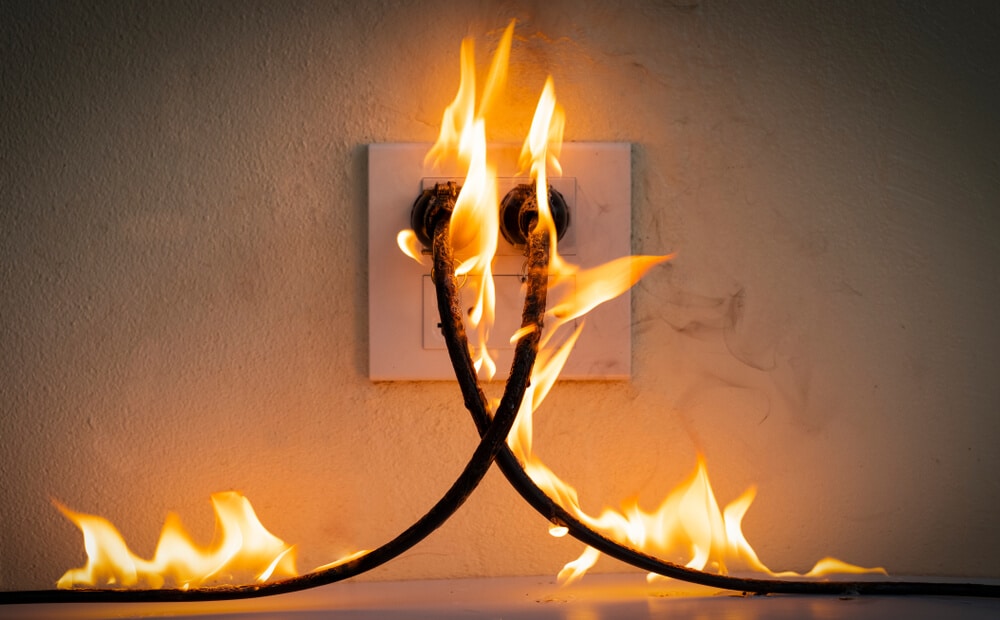
Burning plastic and insulation does release toxins into the air. When plastic begins to melt, it releases ketones and aldehyde gases, which are harmful to breathe. HVAC systems might spread the smell through your house, making it harder to pinpoint the location of the fire.
Other Signs of an Electrical Fire
Not every electrical fire gives off an acrid smell. Your other senses can pick up additional warning signals. These can include:
Hearing
A buzzing sound from a switch, outlet, or unidentified source usually indicates an electrical problem. A fire might be behind the wall if the buzzing is isolated to one location. A buzzing outlet likely has a loose connection or is shorting out.
Vision
If outlets and switches look charred or discolored, burning has already occurred, and a fire may be in progress. Sparking, dimming, flickering lights, or frayed/exposed wires and cables are bad signs and mean it’s time to call an emergency electrician.
Touch
If an outlet, switch plate, or other electrical component feels hot (even if connected to a heat-producing device such as a hair dryer or toaster), it can mean wiring has overheated and that an electrical fire may be imminent. Switch plates can be slightly warm, but if they are hot, there is a problem.
What Can I Do if I Suspect I Have an Electrical Fire?
If you hear buzzing, see charring, or feel heat on a switch or outlet plate, cut off power to that section from the electrical panel’s circuit breaker. Don’t use it again until you’ve had an electrician inspect the problem.
Electrical fires often start from overloading and bad wiring. These are the same factors that cause circuit breakers to trip. If you have breakers that trip regularly, too many high-amp appliances may be plugged in.
Or there may be an electrical short. Drawing too much power or electrical shorts in faulty wiring are risk factors associated with electrical fires and major damage.
Are Electrical Fires Dangerous?
Yes, they can be extremely dangerous and deadly. If you're getting sensory feedback, this is alerting you to immediate danger. Whether there’s a fishy odor or a discolored or hot outlet, calmly leave your home and keep a safe distance away.
Then, call 911 or your local fire department. Firefighters use various methods to find a fire and put it out quickly. Once the fire is extinguished, an electrician can get to work and fix what caused the problem in the first place.
Contact Black Hills Home Services
Homeowners in the Olympia area can trust Black Hills Home Services for wiring repair, house rewiring, and electrical updates. Our licensed electricians can reduce your risk of a house fire, electrical shock, and other safety issues.
Never attempt to fix an electrical problem yourself. Our team is properly trained, equipped, and experienced, and we can safely resolve any electrical issue. Call 888-295-1201 to schedule prompt service. We offer residential home electrical inspection and safety checks in Olympia and the Greater Washington Area.
Schedule Online(360) 822-9659